
Lynn County Parole and Probation
Parole and probation are both forms of supervision in the community, but they start in different systems. Parole follows release from the Texas Department of Criminal Justice. Mandatory supervision is another TDCJ release path set by statute and Board action. Probation, formally called community supervision in Texas, is imposed by a court. Someone can leave the Lynn County Jail on probation without ever entering a state prison.
The distinction controls where a reliable Lynn County supervision record can be found. TDCJ’s Parole Division and the Texas Board of Pardons and Paroles handle parole and mandatory supervision. The local Community Supervision and Corrections Department handles a Lynn court’s probation order. A conviction county, release facility, and current residence may differ, so the office assignment should be confirmed rather than assumed.
| Question | Parole or mandatory supervision | Probation |
|---|---|---|
| Who orders it? | Texas Board of Pardons and Paroles under state law | The sentencing court |
| What custody precedes it? | A TDCJ prison term | Often a court case or county-jail release |
| Who supervises? | TDCJ Parole Division district office | Local CSCD |
| Best proof | Release certificate, Parole Division record, or discharge statement | Judgment, community-supervision order, or court discharge order |
- Parole
- Conditional release from prison before the sentence’s maximum expiration.
- Mandatory supervision
- A statutory prison-release route that may require Board approval.
- Probation
- Court-ordered community supervision, sometimes imposed instead of prison.
- Discharge
- Formal completion of the sentence or supervision term.
Verify Lynn County Post-Release Supervision
Begin with the last known custody system. A person leaving Lynn County Jail under a local judgment should be checked through the sentencing clerk and Lynn Adult Probation. A person released from a TDCJ unit belongs in the state parole channels. If the custody route is unclear, ask the sheriff’s office whether the jail disposition was community release, transfer to TDCJ, movement to another county, or another agency handoff.
- Collect the full name, exact date of birth, and any TDCJ, SID, cause, or booking number.
- Identify whether the controlling document is a Lynn court order or a TDCJ prison-release action.
- For state custody, check the TDCJ offender search while the person remains incarcerated. Use the Board status line before a vote and the Parole Division line after approval.
- For probation, contact Lynn Adult Probation and request the sentencing order from the correct clerk. Personal supervision details may be restricted.
- Confirm completion with a discharge order, release certificate, or statement from the supervising agency. Preserve the source date and identifiers.
TDCJ’s current online locator includes only people incarcerated in a TDCJ facility, with working-day updates that are at least a day old. A released parolee may disappear from that search. The TDCJ IVSS portal can provide state prison and parole status notifications, but an alert is not the full supervision record. Written records remain stronger when the exact release or discharge event matters.
Lynn County Supervision Offices
Lynn County has two concrete supervision routes. The Lynn County Adult Probation office is in the courthouse and handles local community supervision. The TDCJ county crosswalk assigns parole supervision for Lynn residents to the Lubbock District Parole Office in Region V. A person’s residence can change the final state office assignment, so call before relying on the directory entry.
Lynn County Adult Probation
Sharrel Rodriquez; secretary Gracie Zapata
1501 South 1st
Street / PO Box 97
Tahoka, TX 79373
806-561-5577
Fax:
806-561-4894
Lubbock Region V Parole Office
1720 E. Regis Street
Lubbock, TX 79403
806-747-8282
Fax:
806-747-8407
The local CSCD is not a branch of TDCJ parole. TDCJ’s Community Justice Assistance Division helps oversee CSCD standards, but its staff do not directly supervise individual probationers. For a local order, the Lynn probation office and sentencing court are the correct contacts. For state release, the Lubbock parole office and TDCJ Parole Division control the record.
Lynn County Parole Review Status
Texas parole consideration is a file review, not a public courtroom hearing with a county calendar. TDCJ identifies cases before eligibility, an Institutional Parole Officer interviews the incarcerated person, and a three-member Board panel reviews the case in sequence. Two matching votes decide the result. The official parole review process describes that workflow.
Before a panel vote, call 844-512-0461 with the name, TDCJ or SID number, and date of birth. After a favorable vote, 512-406-5202 is the release-status line. An FI code identifies an approval path, and RMS concerns mandatory supervision. NR, SA, and DMS are nonrelease outcomes. Some approvals require a program or release plan, and the Board can withdraw approval if new information arrives.
A vote is not physical release. Certificate preparation, records audit, an approved residence, program completion, a hold, or new case information can still affect timing. The TDCJ scheduled-release FAQ explains why a scheduled date can change.
The official TDCJ scheduled-release FAQ shows the distinction between an approval path and the completed event.
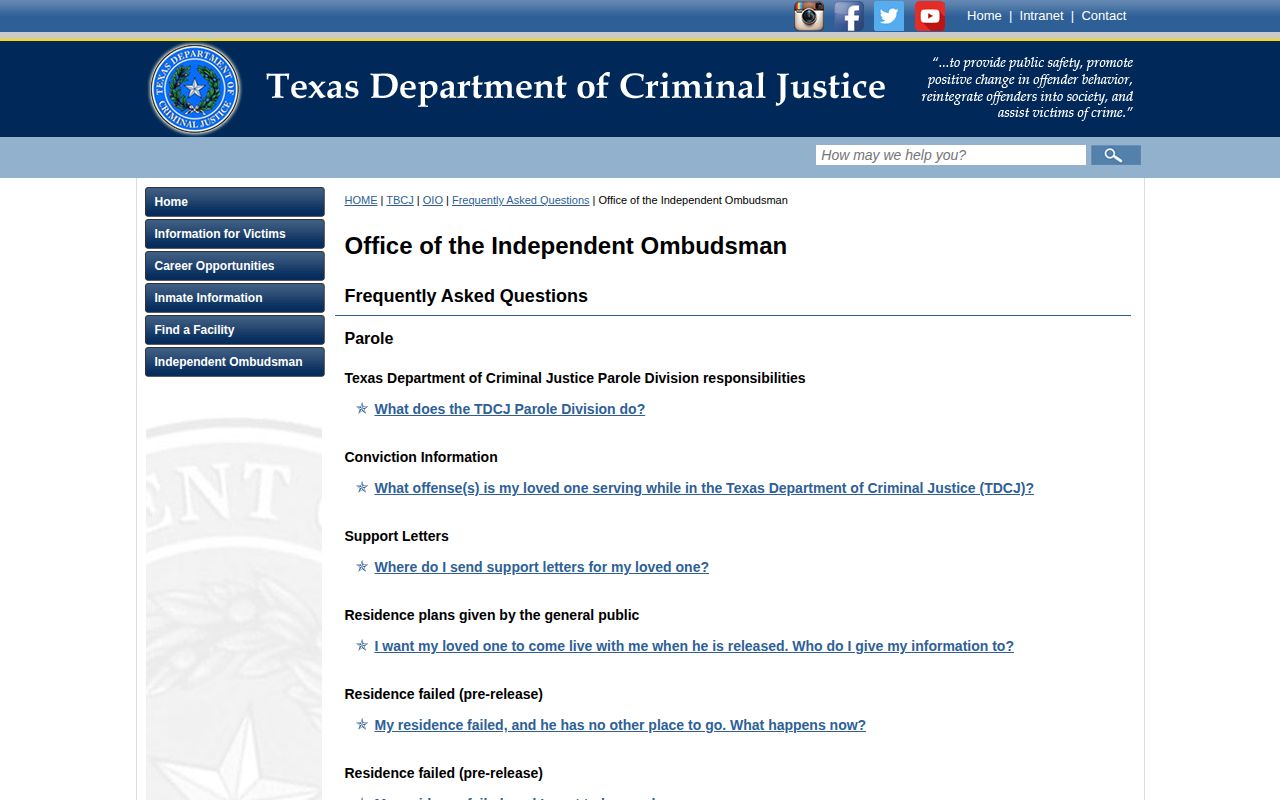
Use the underlying TDCJ release certificate or Parole Division record to document what ultimately happened.
Lynn County Supervision Violations
Conditions vary by the court order, Board certificate, offense, and individual plan. They may address reporting, residence, travel, programs, fees, or contact restrictions. A violation allegation can lead to added review, a warrant, or revocation proceedings, but an allegation alone does not establish the final outcome. Ask the supervising office or court for the releasable status tied to the correct person.
An absconder is someone alleged to have stopped reporting or left supervision without authorization. No official general Lynn County absconder list was found in the research sweep. TDCJ maintains a specialized sex-offender absconder channel, but that is not a universal parole or probation warrant search. A stale address or missed call should never be converted into a warrant claim.
A person may therefore be out of a jail or prison yet still face an alleged supervision violation. Verify the current agency, any court action, and whether a warrant is active. The ordinary inmate locator cannot answer all three.
When a warrant is suspected, use the office that owns the supervision term. Lynn Adult Probation can route a question about a local court order, while the Lubbock district office handles a state parole assignment. Ask for the releasable status and the court or agency that can confirm it. Do not publish a claim based on rumor, a missed appointment, or an old address.
Proving Lynn County Discharge
Active supervision ends through a formal discharge, sentence expiration, or other lawful order. A fully discharged person is not an active parolee merely because an older record mentions parole. For probation, obtain the court’s discharge order. For a state prison term, request the release certificate or a releasable statement from TDCJ and the Parole Division.
The Texas DPS correction guidance gives a useful Lynn County document checklist. It identifies a charging instrument and judgment, plus proof such as a court discharge order, penal-institution certificate of release, or letterhead statement from the supervising or discharging agency. These documents are more persuasive than a blank result page.
- Match the name and birth date on every document.
- Compare the cause, SID, TDCJ, and booking numbers when available.
- Separate release from confinement from discharge from supervision.
- Keep the agency response date and the office that supplied it.
- Ask the originator to resolve conflicting status entries.
Texas Government Code Chapter 552 governs requests to government offices, but exceptions can protect personal or case information. Expunction and nondisclosure can also restrict dissemination. The records custodian decides what may be released. Broader Lynn County release-record routes are covered on the released inmate search.
If two records disagree, compare the event each one describes. A prison release certificate can mark departure from TDCJ while a parole record shows that supervision continued. A court discharge order may end probation without saying when an earlier jail departure occurred. Keep both documents, note their source dates, and ask the originating offices to correct their own entries.